
Introduction
Whether it’s timeless hardwood or budget-friendly laminate, there comes a time in every flooring material’s life when the property owners need to think about getting some work done. While repairs are enough for isolated cracks and grout damage, replacing the floor is necessary in case of moisture damage and extremely expensive repairs. If you’re a concerned homeowner looking to understand when you should book flooring services for your property, the following blog has you covered.
Understanding Your Floors: When Simple Fixes Are Enough
We know you went for the best flooring installation services in town. But that doesn’t make your floors immune to scratches and stains caused by high heels and spilled drinks. However, as bad as these look, you don’t have to start budgeting for a new floor quite yet. The following section highlights a few times that an expert floor repair service is all you need.
Read along as we explain.
- Cosmetic Damage
If your hardwood seems dull or the vinyl is scratched up, the damage is mostly superficial. So, when you contact the best flooring contractor in your area, schedule a floor repair service with them. Just some sanding and polishing, and the floors will be restored.
- Grout Damage
Broken and cracked grout lets in dirt, looks bad and lowers the value of your property. But it doesn’t warrant a floor replacement. Get a team of flooring experts on site and ask them for a spot replacement or easy regrouting to restore the charm of your flooring.
- Isolated Damage
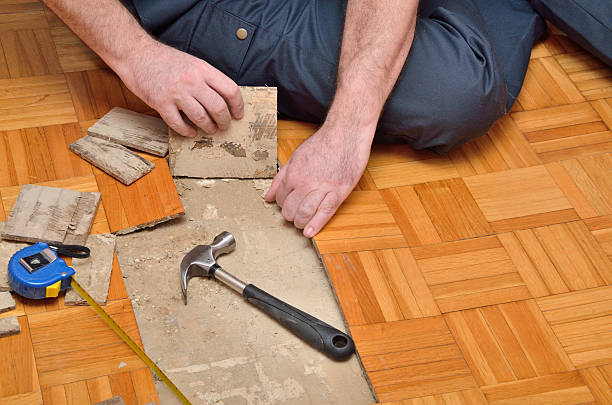
Another time that a floor repair service is enough is when the damage is limited to a few popped tiles or warped hardwood planks. Have a team of qualified experts assess the situation so that they can replace those few pieces instead of the entire flooring.
- Small Stains
From spilled drinks to pet accidents; stubborn stains of any kind can completely ruin the look of your floors. But instead of throwing out the carpets or swapping the tiles, get experts in and have them spot treat the stain till your floors are as good as new.
Flooring Overhauls: Common Signs It’s Time For A Replacement
Okay, but what if the damage is more than just a few small scratches and stains? If the damage is widespread or if the floor repair service is over 30% the price of a new flooring installation, replacing the entire floor is far more cost-effective in the long run. The section below covers all the signs that it’s time for a residential floor replacement.
- Moisture Damage
Hardwood is especially sensitive to moisture levels. So, if you notice that your hardwood planks are swollen, cupped or crowning a lot, they can’t be saved. Reach out to a professional to inspect the subfloor and replace the entire floor to prevent further damage.
- Aging Material
When your floors are nearing the end of their natural life, the repairs are going to become more frequent and the appearance of the floor will lose its charm. So, depending on the flooring material, you should replace it. Here are a few examples of when:
- Laminate: 15-20 years.
- Vinyl: 10-25+ years.
- Ceramic: 20-50 years.
- Hardwood: 75-100 years.
- Unstable Subfloors
If the subfloor feels soft and unsteady under your feet or if you hear squeaking sounds every time you get up for a glass of water, the subfloor is either too worn or not installed properly. A floor repair won’t cut it at this point; so you should book a replacement.
- Sanding Limit
Another important deciding factor is when the floor planks have reached their sanding limit. If the hardwood floors have already been refinished 3-5 times, the planks are too thin and can’t be shaved down any more. You should budget for a floor replacement at this point.
- Extensive Damage
If the cracks, stains or broken tiles are on more than 30% of your total flooring, the damage is too extensive. Instead of wasting your money on replacing half the floor, you should grit your teeth and have experienced flooring specialists swap out the entire floor.
Conclusion
In a nutshell, there are plenty of signs that let you know when it’s time to either repair or replace your property’s flooring. If the damage is localized or superficial, a floor repair service is usually enough. On the other hand, if the stains and cracks have impacted a larger section or the integrity of the floors, you should be booking a residential floor replacement service instead. We hope this article was insightful. If you have more questions, please drop us a line.
FAQS
What is the price of new vinyl flooring?
Depending on quality, the cost is $2-7 per square foot.
How long does hardwood restoration take?
Restoring damaged hardwood usually takes 3-5 days.
Can I install laminate floors myself?
Yes; a DIY laminate floor installation is a popular project.